
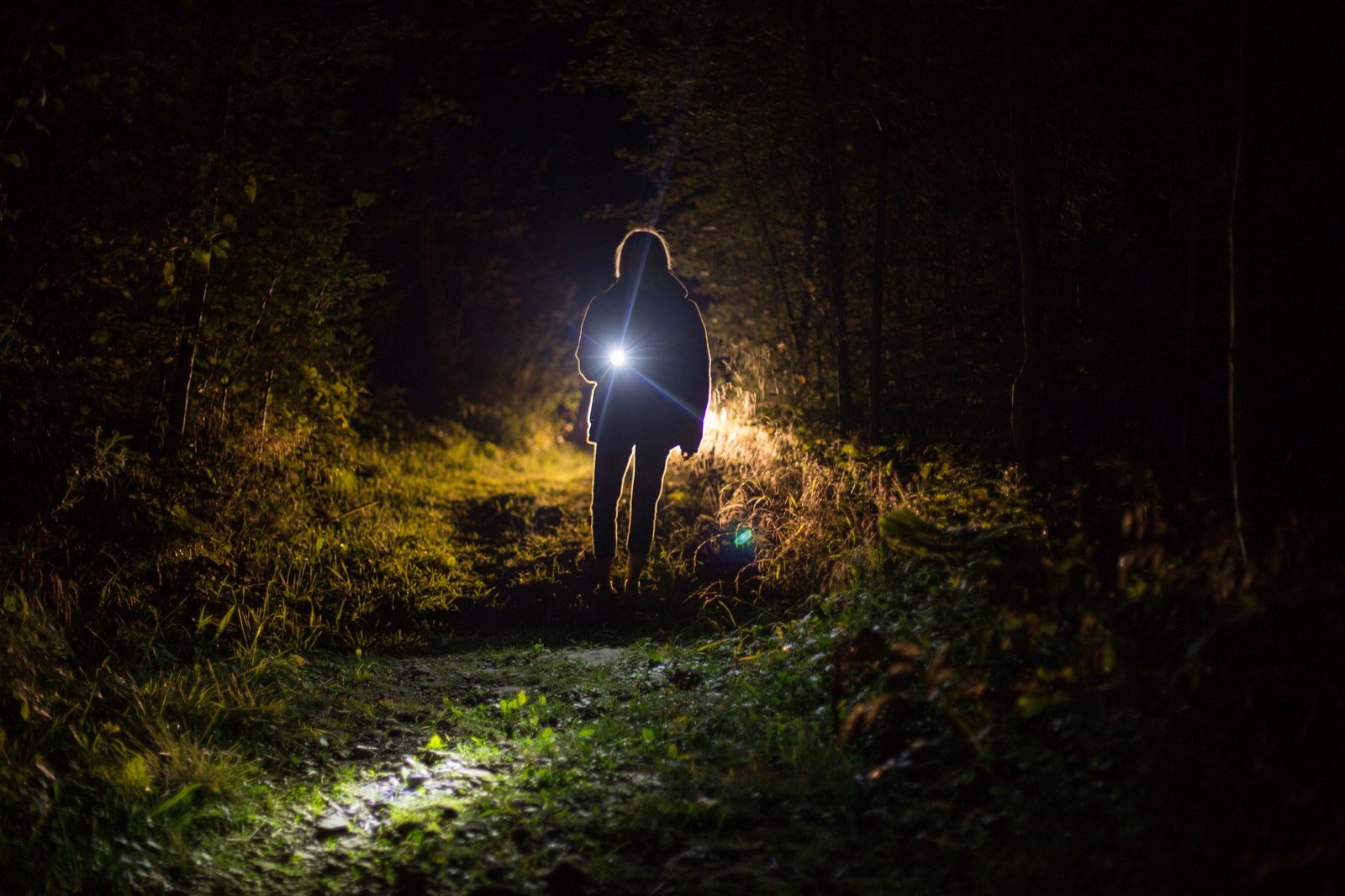
The first date might be in a condemned building, and that's not a red flag
Every relationship has its own version of "normal." For most couples, normal is dinner reservations and a movie. For couples where one or both people are active paranormal investigators, normal might be a Saturday night spent in an abandoned asylum with a spirit box, a thermal camera, and a flashlight held between your teeth while you both wait — genuinely, hopefully — for something to answer back.
If you're dating a ghost hunter, or you are one and you're trying to figure out how that fits into a relationship, here's what the experience actually looks like once the novelty wears off and it becomes simply part of your life together.
Understanding the hobby before you understand the person
Ghost hunting — paranormal investigation, if you want the more formal term — isn't a single activity. It's a discipline with its own tools, its own methodology, and its own culture. Investigators use EMF meters to detect fluctuations in electromagnetic fields, spirit boxes that scan radio frequencies rapidly in search of voices, EVP recorders that capture audio outside the range of normal hearing, and thermal or full-spectrum cameras to catch what the naked eye misses. Sessions are often methodical: baseline readings taken before anything "happens," notes logged with timestamps, evidence reviewed afterward with more skepticism than most outsiders would expect.
That last part surprises people. The popular image of a ghost hunter is someone who believes everything is a ghost. In practice, most serious investigators are careful, even skeptical, about their own findings — they rule out drafts, wiring, and pareidolia before they get excited about anything. Understanding that discipline is the first step to understanding the person: this isn't a hobby built on credulity. It's built on the patient pursuit of something real.
What a relationship with a ghost hunter actually looks like
Your home will have equipment in it. EMF meters live in junk drawers. Spare batteries multiply in kitchen cabinets. A digital voice recorder ends up next to the car keys because it went on the last investigation and never quite made it back to storage. This is not clutter to be tidied away — it's the toolkit of something your partner takes seriously, and treating it with the same respect you'd give a musician's instruments or an artist's supplies goes a long way.
Nights will sometimes be unconventional. Investigations often happen late, because that's when locations are quiet enough to record clean audio and when access is easiest to arrange. A date night might mean driving two hours to a reportedly haunted hotel, checking in near midnight, and spending the next four hours in near-silence, waiting. If that sounds unbearable, ghost hunting culture may not be for you — and that's worth knowing early. If it sounds like an adventure, you've found something most couples never get to share: a hobby with genuine stakes, where "nothing happened" and "something happened" both make for a story you'll tell for years.
Debriefs matter as much as the investigation. After a session, investigators typically review their audio and footage — sometimes for hours, sometimes over several days. A supportive partner learns to sit through this process without impatience, understanding that the review is where the actual discovery happens, long after the location has gone quiet.
You'll need your own boundaries, and that's healthy. Not every partner of an investigator wants to be an investigator themselves. Some come along for every session; others prefer to hear about it afterward over coffee. Both are legitimate. What matters is that the boundary is communicated clearly rather than assumed — "I love that you do this, but overnight investigations aren't for me" is a completely reasonable thing to say, and a ghost hunter who respects your interests will respect that limit in return.
Red flags versus real quirks
Every hobby-driven relationship has friction points, and paranormal investigation is no exception. It's worth distinguishing between quirks that are simply part of the territory and behavior that's a genuine concern.
Normal quirks: odd hours, a spare room slowly becoming equipment storage, a group chat with fellow investigators that lights up at 1 a.m., a tendency to narrate ambient noise ("did you hear that knock?") in situations where you didn't hear anything at all.
Actual red flags: dismissing your safety concerns about investigating alone in genuinely dangerous locations, prioritizing every investigation over commitments that matter to you, or refusing to ever include you in any part of the hobby, even conversationally. Passion for the paranormal is not an excuse for neglecting the relationship in front of it — the same rules that govern any hobby-partner balance still apply here.
They don't require a defensive preamble before you mention the recurring dream that turned out to mean something. They can sit with you at midnight in a place most people would run from — and understand that it's not morbid. It's meaningful.
Why it works better than people expect
The couples who thrive in this dynamic tend to share something deeper than the hobby itself: a mutual comfort with uncertainty. Paranormal investigation rarely delivers clean answers. Most sessions end in ambiguity — a strange sound that might be a pipe, a reading that might be interference, a feeling that might be nothing. Partners who can sit in that unresolved space together, without needing every question answered before moving on, tend to carry that same patience into the rest of the relationship.
There's also a practical intimacy to it. Few activities force two people into hours of quiet, focused attention the way an investigation does. No phones, no distractions, just the two of you and a dark room, listening for the same thing. Couples who've done this together often describe it as more bonding than a dozen ordinary dates combined.
Questions worth asking before your first investigation-date
If a ghost hunter invites you along on an investigation early in the relationship, a few honest questions upfront will save both of you friction later. Ask what the location's access situation actually is — permitted and arranged, or a legal gray area — since your comfort with risk matters as much as theirs. Ask how long the session typically runs, so you can gauge your own tolerance for standing quietly in the dark for three or four hours. Ask what role you're expected to play: silent observer, equipment handler, or active participant asking questions into a spirit box. And ask what happens if you get spooked and want to leave — a good investigator will always have an answer for this, because investigator safety protocols already account for it.
None of these questions signal a lack of enthusiasm. They signal exactly the kind of careful, respectful curiosity that makes a first investigation-date go well instead of becoming a one-time experiment neither of you repeats.
Making it work long-term
If you're the non-investigating partner, the goal isn't to fake enthusiasm you don't feel — it's to find your own way in. That might mean joining occasionally rather than every time, taking an interest in the evidence review even if the overnight sits aren't for you, or simply asking good questions afterward. If you're the investigator, the goal is remembering that the relationship isn't a support crew for the hobby — it's a partnership the hobby fits into, not the other way around.
Done well, dating a ghost hunter means dating someone who brings genuine curiosity, discipline, and patience into every part of life, not just the investigations. The equipment in the junk drawer is just evidence of that.