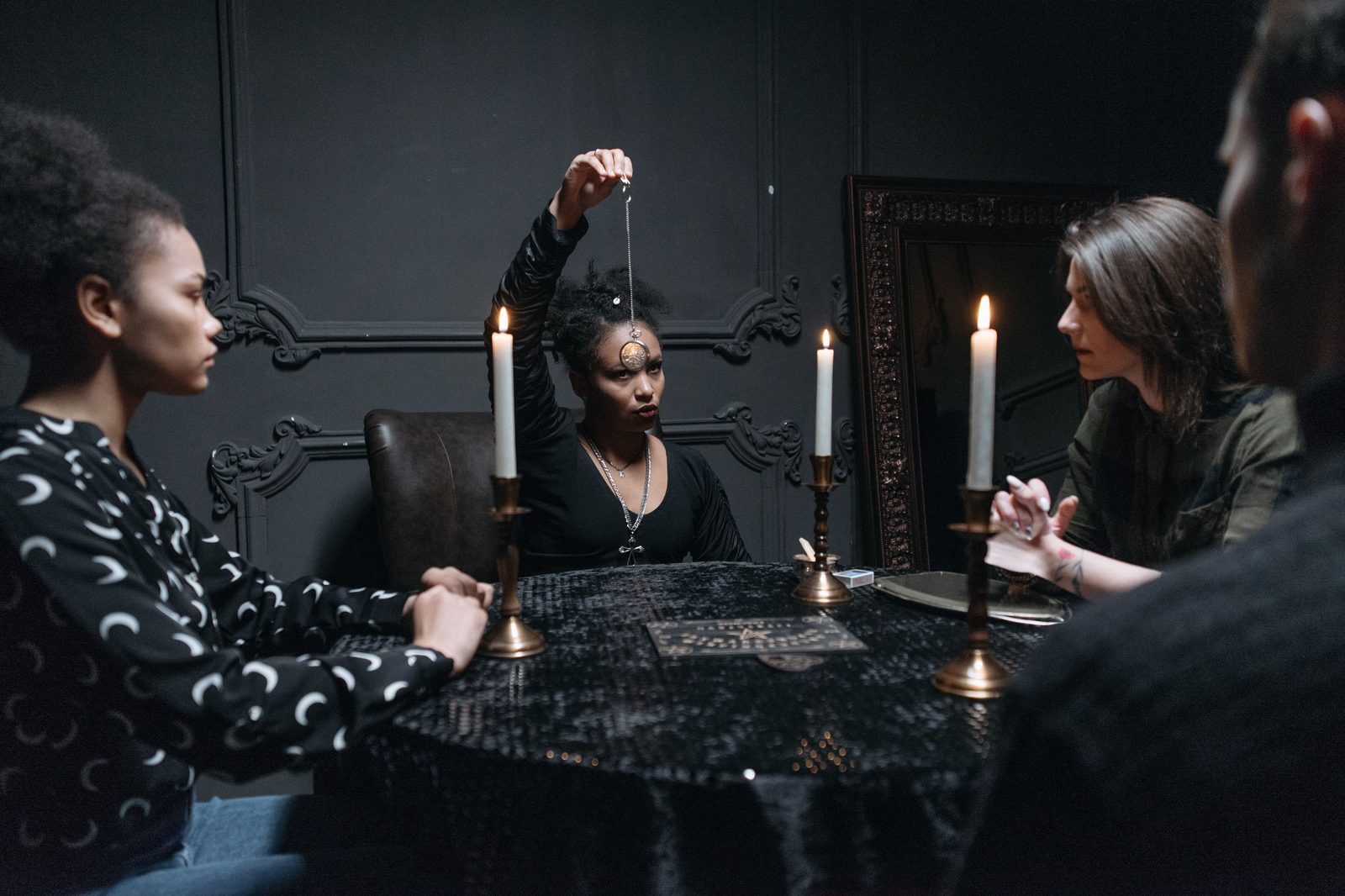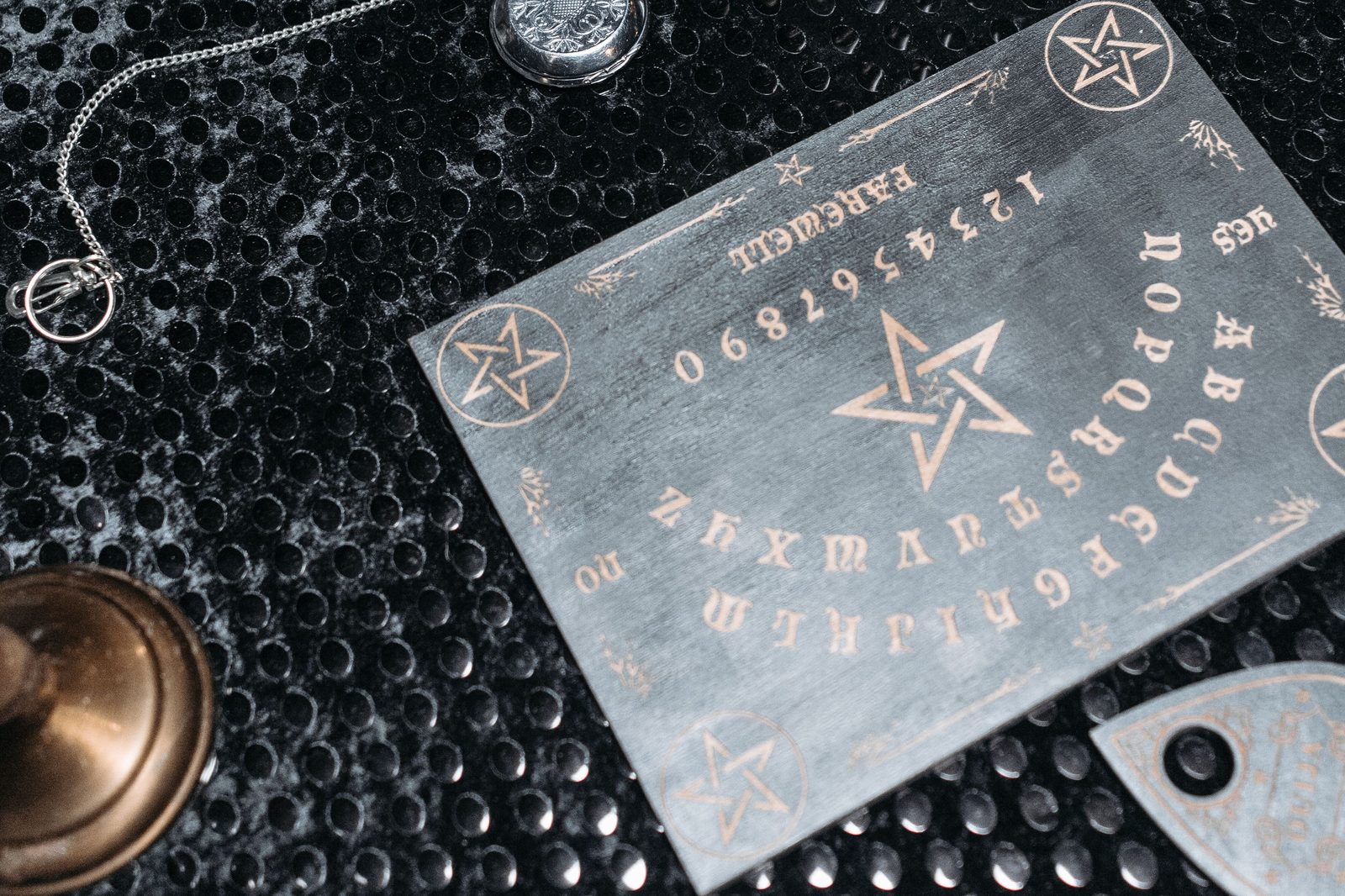
The United States has one of the largest, most organized paranormal communities in the world — a patchwork of regional investigation teams, centuries-old haunted landmarks, and a genuine tourism industry built around the unexplained. For paranormal daters, that scale is an advantage: whichever corner of the belief spectrum you're on — ghost hunting, UFO research, Wicca, astrology, cryptid tracking — there's very likely an active local community near you, and a national dating culture that has slowly made room for people who used to keep these interests private.
Dating culture for American believers
American dating culture is famously casual on the surface and famously anxious underneath — a combination that historically hasn't served paranormal-minded singles well. Bringing up a genuine UFO sighting or a standing Wednesday-night tarot practice on a first date, on a mainstream app, still risks the conversation stalling out. What's shifted in the last decade is regional: cities with strong paranormal tourism economies — Salem, New Orleans, Savannah — have normalized the subject matter enough that it's a conversation starter locally, even if it isn't nationally. Paranormal dating platforms exist precisely to close that gap everywhere else: rural Ohio, suburban Texas, anywhere the built-in cultural permission of a "haunted city" doesn't already exist.
Because the US spans six time zones and dramatically different regional cultures, "American paranormal dating" isn't one scene — it's dozens of overlapping ones: Southern Gothic ghost-story culture, Pacific Northwest cryptid and Bigfoot communities, New England witch-trial history and modern Wiccan practice, Southwestern UFO and desert-sighting culture around places like the historic Roswell incident. Matching within your region often means matching within a specific flavor of belief, which is worth naming clearly in a profile rather than leaving vague.
Paranormal organizations and communities
The US paranormal investigation scene is unusually well-organized compared to most countries, with both national umbrella groups and dense state-by-state networks:
The Atlantic Paranormal Society (TAPS)
Based in Warwick, Rhode Island — one of the most recognized investigation organizations in the country, known for popularizing modern ghost-hunting methodology.
National Paranormal Society
An educational, cross-discipline organization connecting investigators, researchers, and the paranormal-curious across all 50 states.
American Association of Paranormal Investigators (AAPI)
A nonprofit paranormal assembly devoted to research and documentation of paranormal phenomena since 2002.
Ghost Research Society
A long-running clearing house for hauntings, poltergeist activity, and life-after-death encounters, with active member-led investigations.
Beyond the national groups, nearly every state has at least one active regional team — from Jersey Unique Minds Paranormal Society (JUMPS) to the Pennsylvania Paranormal Association to countless city- and county-level groups. If your profile mentions ghost hunting specifically, expect matches who are actively affiliated with a team like these, not just casually interested.
Ghost tours and supernatural hotspots
Few countries have monetized and mapped their haunted geography as thoroughly as the US, which makes for genuinely great date ideas as well as community meetup spots:
- Salem, Massachusetts — built around the 1692 witch trials, with cemetery walks, historic-home tours, and a Halloween season that turns the entire town into a live paranormal event.
- New Orleans, Louisiana — voodoo, vampire lore, and ghost walks through the French Quarter, including stops at the infamous LaLaurie Mansion and sites associated with Marie Laveau.
- Savannah, Georgia — frequently cited by paranormal investigators as the most haunted city in the US, with cemetery and haunted-square tours built around 18th-century history.
- Gettysburg, Pennsylvania — one of the most consistently reported sites of paranormal activity in the country, tied to the scale of loss during the Civil War battle.
Operators like Ghost City Tours and US Ghost Adventures run structured tours in 250+ cities, which makes "meet at the ghost tour" a genuinely low-pressure, built-in first date for two paranormal-minded people who haven't met in person yet.
Paranormal events and conventions
Beyond individual tours, the US hosts a circuit of paranormal conventions and conferences throughout the year — often centered in the same haunted-tourism cities — bringing together investigators, mediums, authors, and the paranormal-curious public. These events are a natural, low-stakes place for paranormal daters to meet in person: badge-and-lanyard environments where the shared interest is already established before a conversation even starts. October is unofficially the peak season nationwide — Salem alone runs a month-long calendar of paranormal-themed events, and haunted-history conventions cluster around Halloween in nearly every major haunted-tourism city.
Regional breakdown
Because the country is so large, it's worth thinking about paranormal culture region by region rather than as one national scene:
The Northeast carries the country's oldest paranormal history — Salem's witch trials, centuries-old New England cemeteries, and a dense concentration of colonial-era hauntings. It's also home to some of the longest-running investigation organizations, including TAPS in Rhode Island.
The South has arguably the strongest paranormal tourism economy in the country, anchored by Savannah, New Orleans, and Civil War sites like Gettysburg (technically mid-Atlantic, but culturally tied to this circuit). Southern Gothic storytelling tradition means paranormal belief here is woven into regional identity, not treated as a fringe interest.
The Midwest has a quieter but no less active scene — smaller cities and rural communities with strong local investigation teams (Ohio, Illinois, and Indiana all have long-established groups), often centered on specific haunted landmarks — abandoned asylums, closed prisons, and 19th-century farmhouses — rather than whole-city tourism infrastructure.
The West and Pacific Northwest lean toward cryptid culture (Bigfoot sightings are a genuine regional identity marker in parts of Washington and Oregon) and UFO research, with desert Southwest communities — shaped by decades of sighting reports around sites like Roswell, New Mexico — forming some of the most active UFO-believer social scenes in the country.
Local dating advice
Be specific about which corner of the paranormal you're in — "ghost hunter" reads differently to a match than "UFO researcher" or "practicing Wiccan," and vague profiles ("into spooky stuff") tend to underperform specific ones. If you live near a haunted-tourism city, use it: a ghost tour is a genuinely good first date, with built-in conversation and a natural end point if it isn't a match. If you're in a region without that infrastructure, lean on the national organizations above — a local TAPS-affiliated or National Paranormal Society-connected group is often the fastest way to meet people who take the subject as seriously as you do, whether or not the meeting is explicitly framed as dating.
Finally, remember that American paranormal culture varies enormously by region — what reads as mainstream in Salem may still feel private in a small Midwestern town. A paranormal dating platform exists specifically to remove that geographic luck factor from the equation.
Meeting up safely
Ghost tours, haunted-hotel stays, and investigation meetups are genuinely good first-date settings — public, time-boxed, and full of built-in conversation — but the usual online dating safety rules still apply, arguably more so given how many of these locations are isolated, poorly lit, or open only at night. Meet the first time at a public, ticketed tour rather than a private overnight investigation. Tell a friend where you're going and when you expect to be back. If a match wants to skip straight to an unsupervised night in a remote "haunted" location, treat that the same way you'd treat any other too-fast, too-isolated first-date request — decline or suggest a public alternative first.