
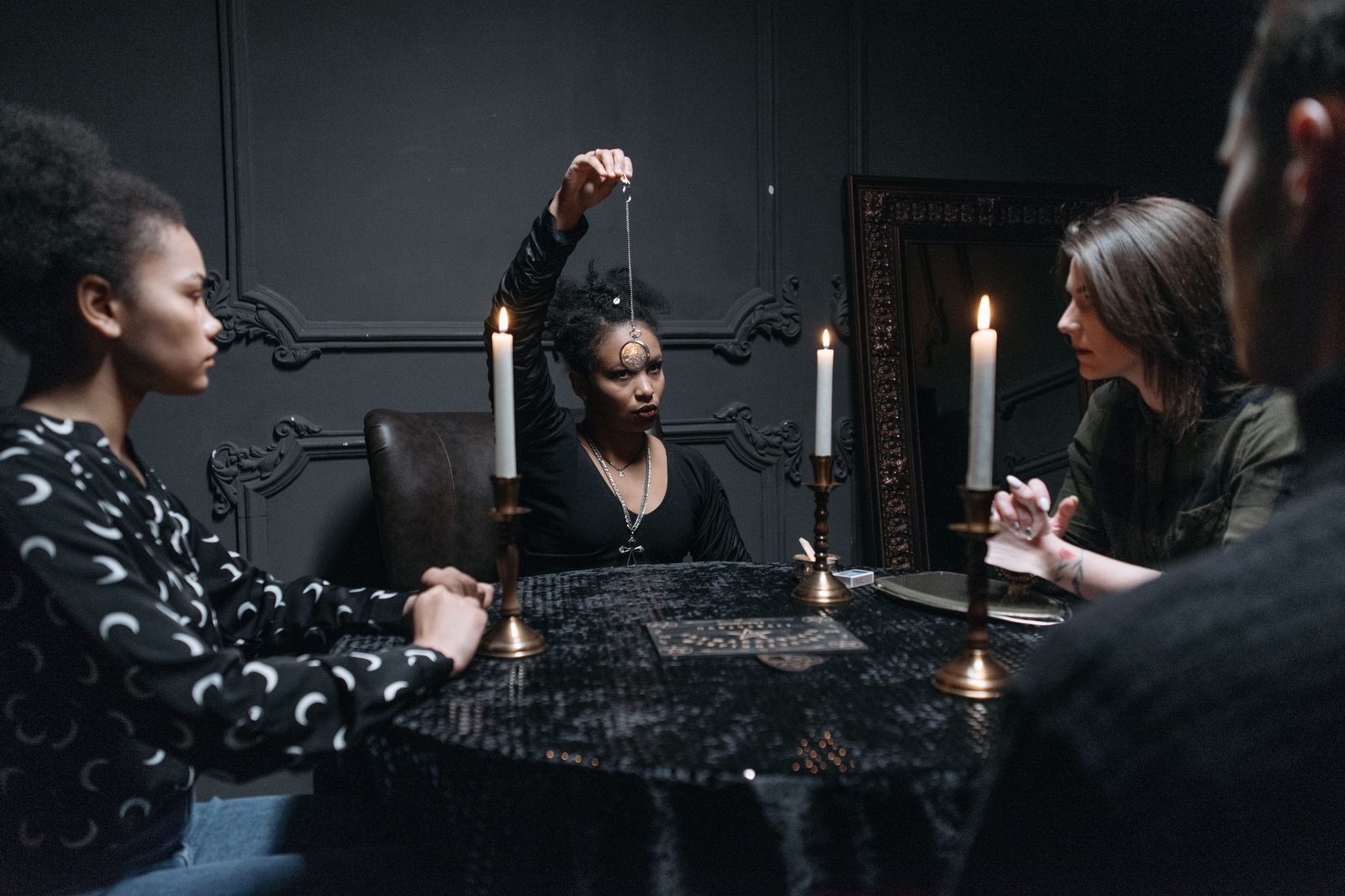
Witchcraft, as a genuine practice, is broader than any single religion — it's a craft, a skill set built around intention, ritual, and often working with herbs, candles, or spellwork, and it's practiced by Wiccans, secular witches, and people of other faiths alike. What unites witches isn't a shared theology but a shared belief that intentional ritual can shape outcomes, paired with a genuine respect for the craft as something learned and refined over time.
Explaining that distinction to a partner who's only seen witchcraft depicted in horror films gets old fast. Dating a fellow witch, or a partner genuinely well-versed in the practice, removes that constant explaining entirely. A shared altar, a shared spell jar on the windowsill, or simply a mutual respect for ritual turns what could be an ongoing point of friction into one of the most genuinely bonding parts of a relationship.
This page is built for witches of every background — secular, Wiccan, hereditary, eclectic — who want a partner who already understands the craft, or who's genuinely curious to learn rather than merely humor you.
Why dating a fellow witch actually matters
A relationship with a partner genuinely unfamiliar with witchcraft often means constant translation and reassurance — explaining that spellwork isn't inherently sinister, that a full altar isn't cause for alarm, that ritual time deserves the same respect as any other meaningful practice. A partner who's already part of the community, or genuinely respectful of it, removes that translation work entirely.
There's also real value in shared craft. Casting intention-setting spells together, building a shared altar, or simply marking the moon phases side by side gives a relationship a genuinely built-in rhythm that a lot of non-practicing couples never quite develop on their own.
And frankly, misconceptions about witchcraft — that it's inherently dark, or theatrical, or somehow dangerous — are still common enough that dating within the community avoids a lot of tiresome, repetitive explaining that wears on a relationship over time.
What the witch community actually looks like
Secular witches
Practitioners who approach witchcraft as a craft and intention-setting practice without attaching it to any specific religion or deity.
Hereditary witches
Daters who learned the craft from family, often carrying forward specific techniques and traditions passed down for generations.
Green and kitchen witches
People whose practice centers on herbalism, cooking, and everyday domestic ritual as a genuine form of magical work.
Eclectic and self-taught witches
Singles who've built their own practice from books, online resources, and trial and error rather than a formal lineage.
Great first-date ideas for witches
- A local metaphysical or occult shop — browsing together for candles and herbs reveals a lot about someone's actual practice.
- A tarot or oracle card exchange over coffee — an easy, natural way to get to know someone's approach to the craft.
- A full moon ritual or open circle — for daters already comfortable meeting within a group setting.
- Cooking a kitchen-witch recipe together — playful, hands-on, and a genuinely good gauge of shared style.
- A walk to forage herbs or seasonal ingredients — calm and low-pressure, with a natural shared purpose.
A metaphysical shop visit remains one of the most reliable first dates in this community — casual, genuinely informative, and a natural way to see how someone actually shops and practices without any pressure.
For a couple further along, attending an open circle or larger craft gathering together is a genuinely meaningful next step, offering real, shared time within the wider community as a pair.
The many forms witchcraft actually takes
Kitchen witchery genuinely centers domestic life — cooking, cleaning, and homemaking — as the primary site of magical work, treating a well-seasoned meal or a tidied home as genuinely intentional acts rather than mundane chores.
Green witchcraft focuses on herbalism and plant-based practice, often overlapping meaningfully with gardening and natural medicine as a lived, everyday expression of the craft rather than a separate hobby.
Hereditary and traditional witchcraft, passed down through families or specific regional lineages, often carries techniques and folk practices that don't appear in mainstream books at all, making that lineage a genuinely valuable and rare thing to share with a partner.
Common misconceptions worth clearing up early
Witchcraft is not inherently tied to any single religion, and it's not the exaggerated, theatrical practice seen in horror films — it's a genuine craft built on intention, skill, and often years of careful study. A partner who assumes it's all cauldrons and curses is going to misunderstand what the practice actually looks like day to day.
It's also worth clearing up early that most witches don't practice to harm anyone — the vast majority of modern witchcraft centers on healing, protection, and personal growth, and a partner who assumes otherwise is likely to misjudge a genuinely thoughtful, disciplined practice.
Building a profile that attracts fellow witches
Being genuinely specific about your practice — secular, hereditary, green, kitchen, eclectic — tells a potential match far more than "into witchcraft" ever could. Mentioning a favorite tool, technique, or how you first genuinely learned the craft tends to invite a much deeper first conversation.
It's also worth noting how central the craft is to your daily life, since that commitment level genuinely varies a lot between daters, and matching on that practical rhythm matters just as much as matching on the specific tradition itself.
Meeting up safely
Metaphysical shops, open circles, and public rituals are safe, well-supervised settings for a first date with someone new. As always, let a friend know your plans in advance, particularly before attending a private ritual or spellwork session for the first time with someone you've only recently met.
Why a dedicated platform helps here
A general dating app offers no real, reliable way to filter for someone who genuinely respects the craft rather than treating it as costume-shop aesthetic. A paranormal-focused platform solves that directly, connecting you with daters who already understand what real, disciplined practice looks like.
It also helps surface the specific style someone genuinely practices — secular, hereditary, kitchen, green — so you're matching on real, lasting compatibility, not just a shared interest in the surface-level imagery.
Given how personal and often genuinely private a witch's practice can be, a platform built specifically for this kind of connection removes the anxiety of deciding when to bring the subject up, since it's already the shared starting point rather than a risky, later-stage reveal.
Local witch communities worth exploring
Metaphysical shops remain the most reliable, recurring meeting point for this community in most cities, often hosting regular open circles, workshops, and moon rituals that welcome hereditary practitioners alongside daters still building their own eclectic practice.
Herbalism classes and foraging walks also draw a genuinely dedicated crowd of green witches, offering a natural, low-pressure way to meet someone new around a genuinely shared, hands-on practice rather than a purely conversational first meeting.
Larger regional witch markets and craft fairs, held seasonally in many areas, are also genuinely worth the trip, bringing together practitioners across every style of practice under one roof and offering a relaxed, browsing-friendly setting where striking up a conversation with a fellow witch happens naturally, without needing any formal introduction at all.