
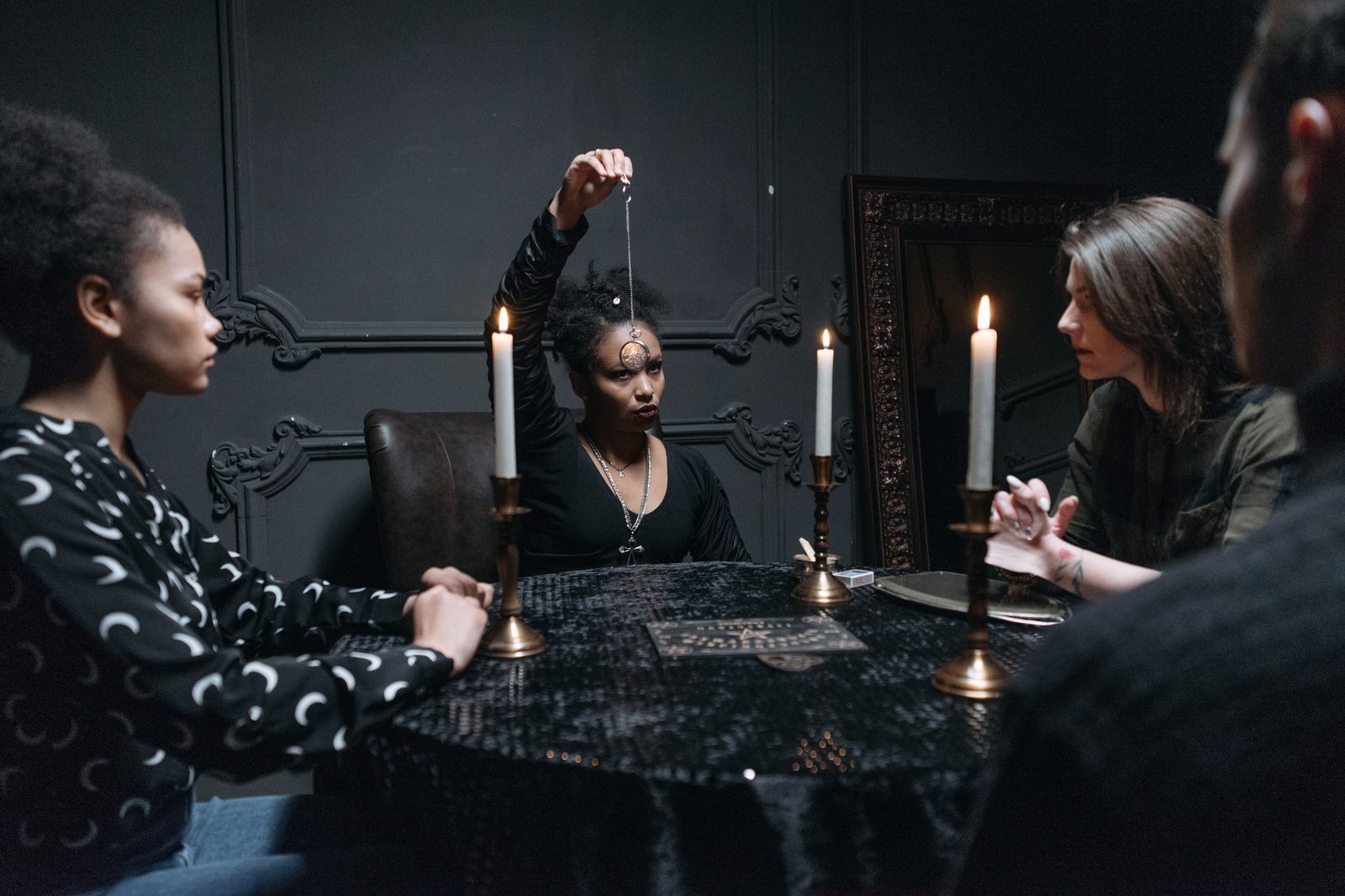
Compatibility gets discussed constantly in dating advice — shared values, shared goals, shared sense of humor — but shared belief rarely gets named directly as its own category, even though for a lot of people it functions as one of the deepest foundations a relationship can have. A partner who shares your belief in the paranormal, the spiritual, or the unexplained isn't just agreeing with you on a topic. They're sharing a lens you see a huge portion of life through, and that changes what's actually possible to build together.
Why belief functions differently than a shared hobby
A shared hobby — hiking, cooking, a favorite show — is genuinely valuable, but it occupies a bounded part of a relationship. Belief tends to run wider and deeper. If you believe the world contains more than what's immediately visible, that belief shapes how you interpret a strange experience, how you make sense of loss, how you think about meaning and coincidence, and often how you want to spend a quiet Tuesday night. A partner who shares that orientation isn't just available for the same activities — they're working from a genuinely similar internal map of what the world actually is.
This is part of why so many paranormal-minded daters describe a specific kind of relief when they finally date someone who shares their belief: it's not that disagreement is impossible in other areas, it's that one entire category of potential friction — being taken seriously, or not being quietly humored — simply isn't there anymore.
What shared belief actually gives a relationship
Practically, a genuinely shared belief system tends to offer a few concrete things. First, a real vocabulary — the specific language of a practice or interest, whether that's astrological terms, investigation methodology, or ritual structure, means conversations move faster because foundational explanation isn't constantly required. Second, a shared sense of what's worth taking seriously — a strange experience one partner has doesn't need to be defended or downplayed before the other partner engages with it genuinely. Third, shared activities that go deeper than entertainment — a joint investigation, a ritual marked together, a reading done for each other — become genuine intimacy-building experiences rather than just something to fill time.
None of this means a relationship built on shared belief is automatically easier in every other respect. Communication, respect, and basic compatibility still have to be built the same way they do in any relationship. What shared belief removes is one specific, often underestimated source of loneliness: the experience of holding something real and meaningful largely alone, even inside a relationship.
The risk of over-relying on shared belief alone
It's worth naming honestly: shared belief is a strong foundation, not a complete one. Two people can believe in the exact same things and still be a poor match on communication style, life goals, or basic day-to-day compatibility. Belief alignment tends to create an early sense of ease and connection that's genuinely valuable — but it can also, if a couple isn't careful, mask real incompatibilities in other areas for longer than it should, simply because the initial connection feels so strong.
The healthiest approach treats shared belief as a real advantage rather than a substitute for the rest of relationship-building. It's a genuinely good head start on trust and understanding — it isn't a shortcut past the actual work of learning how to communicate, argue fairly, and build a life together.
Shared belief is a foundation to build on, not a finish line.
When only one partner shares the belief fully
Plenty of strong relationships involve one partner who holds a belief deeply and one who's more skeptical, curious, or simply less invested. This can absolutely work — but it requires a specific kind of respect that goes beyond polite tolerance. The believing partner needs genuine space to hold their belief without being condescended to or treated as a project to eventually talk out of it. The less-convinced partner needs room to be honest about their own perspective without being pressured into performing belief they don't actually hold.
The relationships that thrive in this dynamic tend to share one trait: real curiosity replaces judgment on both sides. A skeptical partner who asks genuine questions instead of dismissing an experience outright, and a believing partner who doesn't need total agreement to feel respected, can build something just as strong as two fully aligned believers — it simply requires more intentional communication to get there.
Practical ways to build on shared belief together
Couples who build well on this foundation tend to do a few things deliberately. They make time for shared practice — an investigation, a ritual, a reading — rather than letting belief stay purely conversational. They talk openly about how their beliefs have evolved over time, since most people's relationship to belief shifts as they age and gain experience, and staying current with a partner's evolving perspective matters. And they extend the same respect for belief into how they talk about it with family, friends, and the wider world — presenting a united front rather than letting one partner defend the relationship's foundation alone.
They also stay honest about differences within the shared belief itself. Two tarot readers might use completely different systems; two ghost hunters might have very different views on evidence standards. Genuine compatibility within a shared belief category still benefits from real conversation about the specifics, rather than assuming identical belief just because the broad category matches.
How shared belief shows up in the small, everyday moments
It's easy to picture shared belief as something that only matters in big, dramatic moments — a major ritual, a significant investigation, a life-changing reading. In practice, it shows up just as often in small, everyday ways: a quick text about an unusual dream, a shared laugh over a coincidence neither partner needs to explain away, a genuine "did you feel that?" moment that doesn't require any justification before being taken seriously. These small moments accumulate over time into something that starts to feel like a real, quiet form of intimacy — the sense that you don't have to translate your own experience of the world before sharing it with the person closest to you.
Couples who've dated both within and outside the paranormal-belief community often describe this specific difference most vividly: not the absence of disagreement, but the absence of that constant low-level translation work. That energy, once freed up, tends to go somewhere else in the relationship — toward deeper conversation, toward more genuine shared activity, toward simply feeling more fully known by a partner day to day.
The honest takeaway
A genuinely shared belief is honestly one of the most underrated foundations any real relationship can have — it offers real vocabulary, real validation, and a genuine sense of not being alone in how you see the world. But like any foundation, what gets built on top of it still matters enormously. The strongest relationships in this community pair a real, shared belief with the same ordinary relationship fundamentals every strong couple needs: honest communication, mutual respect, and a genuine willingness to keep growing together, one full moon or investigation or reading at a time.