
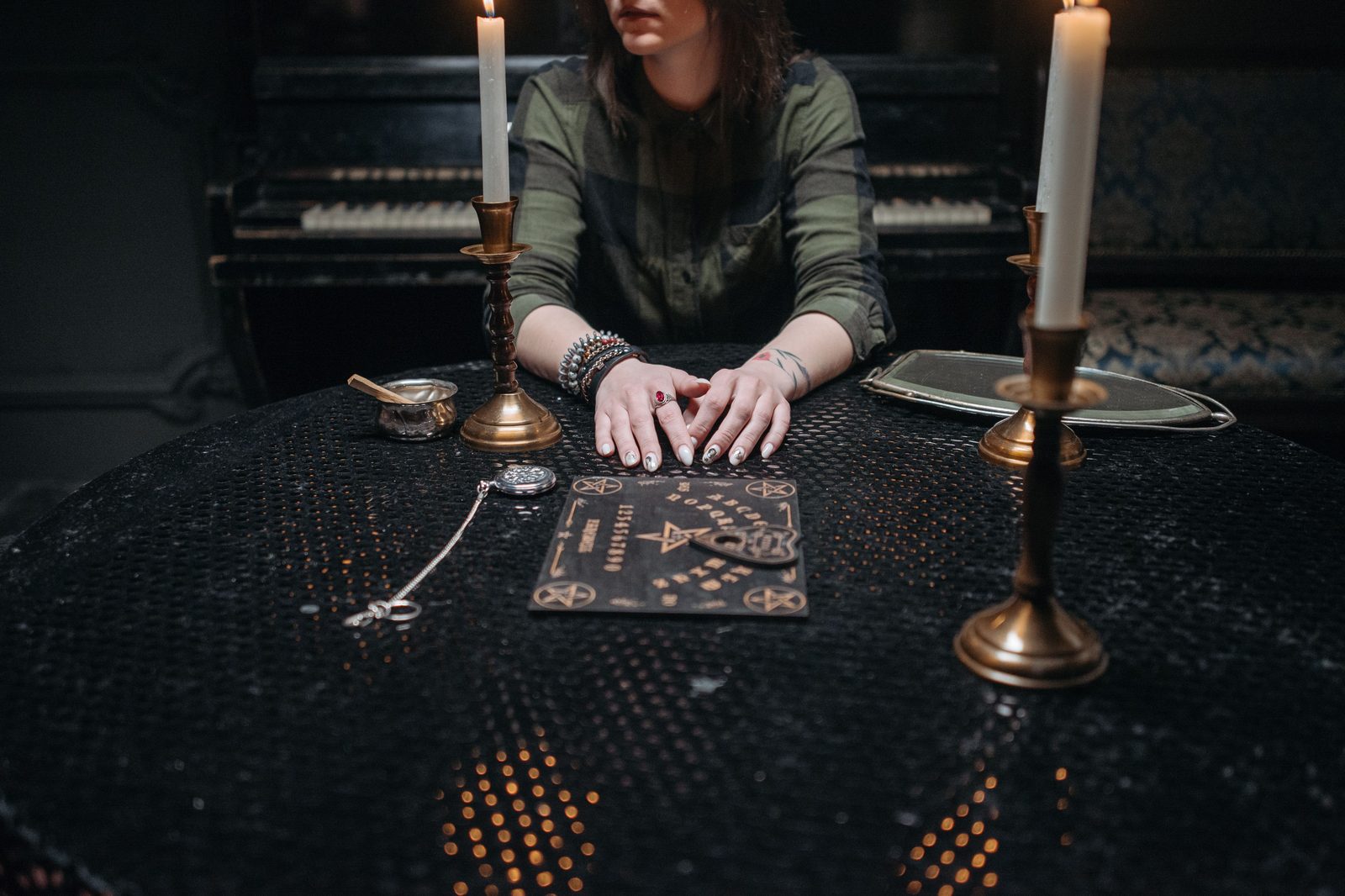
"Occult" genuinely covers a wide range of real practice — witchcraft, Wicca, paganism, tarot, ceremonial magic, and related traditions, each with its own real history, distinct vocabulary, and specific community norms. A genuinely good occult dating platform should reflect that range, not treat witchcraft and general "spookiness" as interchangeable.
We're a paranormal-focused platform with a genuine occult-practice community within it, so we're not a neutral party here — but we think it's worth being direct about what actually matters when evaluating an occult dating site, wherever you end up.
What actually matters for occult-practicing daters
Respect for real practice
A platform that treats witchcraft and paganism as genuine spiritual practice, not a costume-shop aesthetic.
Specific sub-community categories
Dedicated spaces for witches, Wiccans, pagans, and tarot practitioners rather than one broad "occult" tag.
Real seasonal and ritual awareness
Content that understands the Wheel of the Year, sabbats, and ritual practice as lived experience.
A community that takes it seriously
Members who are genuinely engaged in practice, not just drawn by aesthetic curiosity alone.
Why "occult" isn't one monolithic thing
A ceremonial witch practicing structured ritual magic, a solitary eclectic Wiccan building a personal Book of Shadows, and a tarot reader without any broader occult practice at all are three genuinely different kinds of daters, even though all three might reasonably fall under "occult." A platform that lumps them into one undifferentiated category risks mismatching people whose actual practices and expectations diverge significantly.
That's why we built dedicated categories for Witch Dating, Wiccan Dating, Pagan Dating, and Tarot Readers Dating rather than one broad occult umbrella. Browse our full interest categories to see how specific that gets.
Where general dating apps fall short here
On Tinder, Bumble, Hinge, and OkCupid, occult practice — if it genuinely appears at all — tends to read as a quirky aesthetic detail rather than a real, serious spiritual practice worth taking seriously. A matching algorithm built for the broadest possible general audience simply isn't built to weigh "practices structured ritual magic" as a meaningful compatibility signal. See our full comparisons with Tinder and OkCupid.
Where broader spiritual platforms sometimes fall short too
Even genuinely spiritual platforms like Spiritual Singles cover a broad range that includes yoga, meditation, and general conscious living alongside occult practice — witchcraft and paganism are one piece of a much larger, broader picture, not necessarily the platform's organizing focus at its core. See our comparison with Spiritual Singles for more on how these communities relate.
Common misconceptions worth clearing up
Not every occult-practicing dater wants a partner who shares identical practice — plenty of witches and pagans are genuinely happy with a partner who's respectfully curious rather than actively practicing themselves, as long as that respect is real and not performative. It's also worth noting that occult practice, for most practitioners, is a genuinely serious, considered spiritual path built over years, not an aesthetic costume worn for effect around Halloween — a good platform, and a good match, treats it accordingly year-round.
How to evaluate any occult dating platform honestly
A few honest questions cut through the marketing: Does the platform distinguish between different occult traditions, or treat them as one interchangeable category? Does its content demonstrate genuine, specific knowledge — sabbats, tools, ritual structure — rather than surface-level Halloween-store familiarity? And does the community feel like it's made up of genuine practitioners, or a thin layer of aesthetic-only members who never engage with the actual practice?
It's also worth checking whether the platform makes room for practitioners at every stage — lifelong witches with decades of practice alongside people just beginning to explore, without either group being made to feel out of place.
What genuine occult community actually looks like
Real occult community tends to have a rhythm most outsiders don't see — sabbats and seasonal celebrations, moon rituals, coven or circle gatherings, and personal practices like tarot spreads or spellwork woven into ordinary weeks rather than reserved for Halloween. A genuinely good platform reflects that rhythm in its content, not just in a general "spooky" aesthetic applied once a year.
Local metaphysical and occult shops, both online and in person, often function as genuine real community hubs — places where practitioners buy candles, herbs, and tools, and where local covens and study groups sometimes form organically over time. A dating platform that understands and references that real infrastructure, rather than treating occult practice as an abstract online-only identity, tends to reflect a deeper understanding of the community it's serving.
Building a profile that attracts a genuine match
Specificity genuinely matters here just as much as in any other niche interest. Naming a specific tradition — Wiccan, eclectic witch, ceremonial magician, kitchen witch, hedge witch — tells a potential match far more than a vague "into witchcraft" description ever really could. Mentioning a specific practice, like tarot, herbalism, or moon rituals, tends to spark a genuinely deeper first conversation than a broad aesthetic description alone.
It's also worth being honest about how public or private your practice is. Some practitioners are openly public about their craft; others keep it more private for personal, family, or professional reasons. A good match respects wherever you genuinely land on that spectrum, and being upfront about it early tends to save both people a real amount of time and unnecessary friction later on.
Safety considerations specific to this community
Ritual gatherings, moon circles, and metaphysical shop events are generally genuinely safe, public settings for a first date or meetup with someone new. As with any date, it's worth telling a friend your plans in advance, particularly before attending a more private ritual or a smaller, less public gathering later in a relationship.
Questions daters actually ask
Do I genuinely need years of practice to join an occult dating platform? No — plenty of members are newer to practice or still exploring which specific tradition resonates with them. Genuine curiosity and respect matter more than years of experience.
Is it genuinely okay to date someone from a different occult tradition than mine? Absolutely, and plenty of couples in this community do — a ceremonial magician and an eclectic witch can build a genuinely strong relationship as long as there's real mutual respect for each other's specific practice.
What's the biggest red flag on an occult dating platform? A match who treats your practice as a novelty or a phase rather than a genuine, considered part of your life — the same red flag that shows up in any relationship where one partner's real values aren't taken seriously.
Is occult practice genuinely compatible with other paranormal interests, like ghost hunting or astrology? Very often, yes — plenty of practitioners hold multiple related interests simultaneously, and a platform organized around the broader paranormal category makes real room for that overlap rather than forcing any single identity.
How do I know if a platform genuinely understands occult practice versus just using it for aesthetic appeal? Look at the specificity of its content — does it reference actual sabbats, tools, and practices by name, or does it stay vague and generic? Genuine knowledge tends to show up clearly in the specific details a platform gets right.